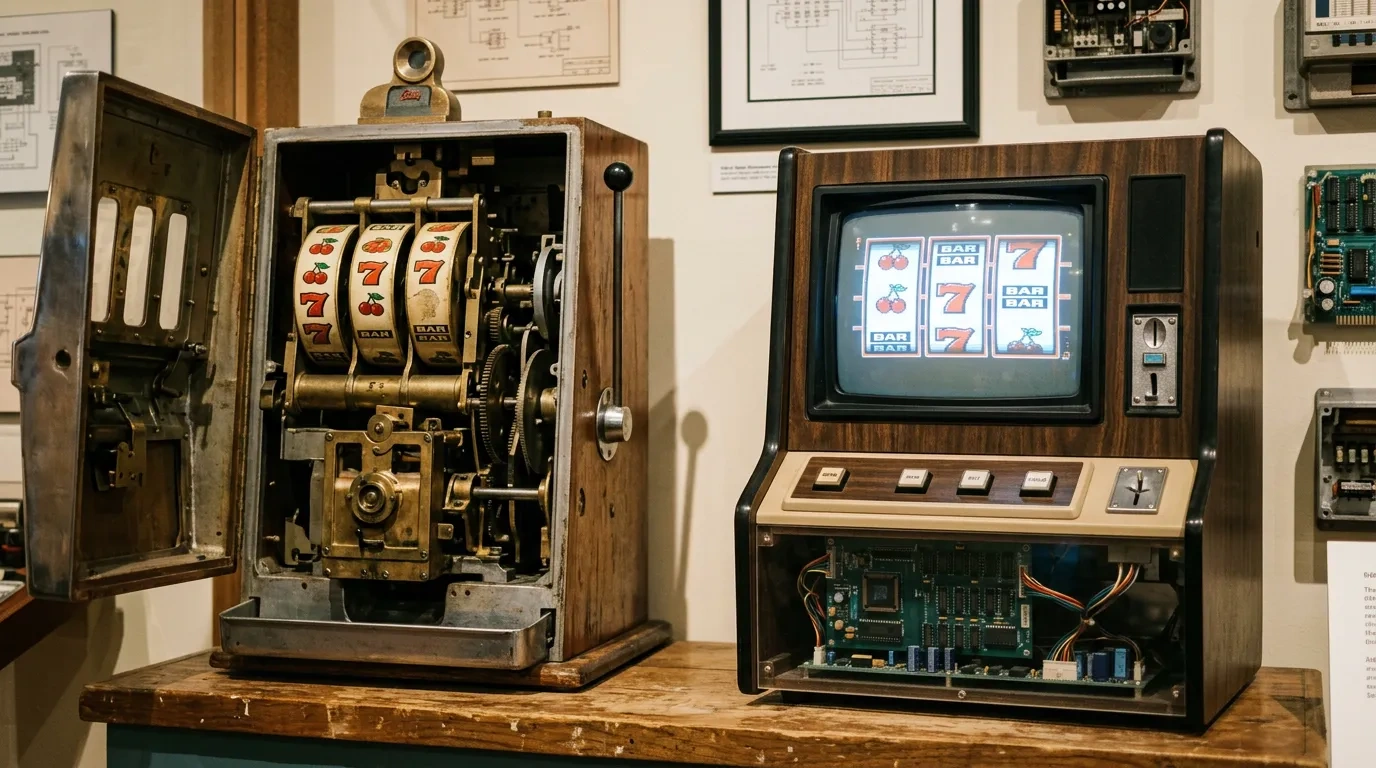
The first video slot appeared in 1976, created by Fortune Coin Company. It used a modified 19-inch Sony Trinitron display and operated on 8-bit electronics. Engineers developed logic boards for random-number generation, credit processing, symbol mapping, and payout calculations. This approach changed player perception of outcomes and established the foundation for systems that run online slots.
Basics Of Early Video Slot Technology
You need to look at how slot machines have changed from all-mechanical setups to the first electronic models to really grasp how they operate. The first video slots swapped out the physical drums for TV screens and brought in microprocessor control. Electronic parts took care of tasks that once needed levers, gears, and spinning reels.
| Component | Detail |
| Reels | Digital images displayed on screen replaced rotating physical drums |
| Processor | 8-bit microprocessor executed stored instructions and coordinated machine functions |
| Memory | EPROM chips stored game rules, symbol data, and payout tables |
| Display | Modified 19-inch Sony Trinitron color television presented reel images |
| Input | Button switches and coin sensors sent signals to the processor |
| Output | Electronic signals controlled credit counters, lamps, and sound circuits |
| Payout handling | Programmed logic compared symbol combinations with stored payout values and updated credits |
Origin Of The First Video Slot Machine
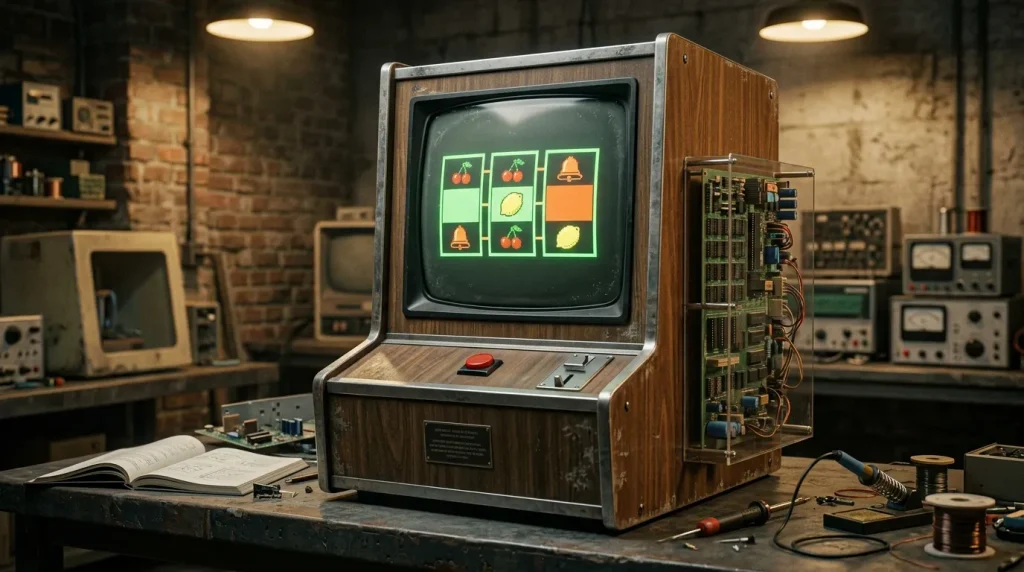
In 1976, the Fortune Coin Company created the very first video slot machine at its facility in California. The prototype featured a 19-inch Sony Trinitron TV nestled within a slot cabinet, swapping out the usual mechanical reels for electronic display tech. Logic boards managed how the game worked and made the reels move on the screen. Production units kicked off field testing at the Las Vegas Hilton, where casino guests came across a screen-based alternative to the usual physical drums. The table below shows details about the origins of this machine, which laid the groundwork for today’s video gaming tech and shaped years of casino evolution:
| Attribute | Detail |
| Year introduced | 1976 |
| Development location | Kearny Mesa California |
| Manufacturer | Fortune Coin Company |
| Screen size | 19-inch Sony Trinitron |
| Display concept | Simulated reels on television |
| Testing venue | Las Vegas Hilton |
| Acquisition year | 1978 by IGT |
Development Timeline Of Early Video Slots
Early slot machines relied on metal reels and gears. Engineers first developed mechanical poker drums, but as technology progressed, they adopted microprocessor-driven video gaming. Designers introduced electronic controls, digital screens, and programmable logic. These innovations made it possible to develop new game formats.
- 1891: Sittman and Pitt poker machine;
- 1963: Bally electromechanical Money Honey;
- 1976: Fortune Coin video slot debut;
- 1978: IGT acquired Fortune Coin technology;
- Early 1980s: Microprocessor-controlled functions expanded.
Inside 8 Bit Processor Architecture
An 8-bit microprocessor replaced the linkages that previously handled these tasks. Engineers programmed it with a sequence of instructions. The chip received bytes and responded to signals sent by mechanisms or buttons. It switched displays, activated lamps, counted, and operated circuits.
| Aspect | Description |
| Data Width | Eight binary bits per byte |
| Instruction Cycle | Sequential read and execute steps |
| Input Reading | Button and coin signal detection |
| Output Control | Display lamp counter sound activation |
| Timing | Clock pulses synchronize all operations |
| Limitations | Low memory and narrow data paths |
How Random Number Generators Worked
In the beginning, video slot machines used electronic random number generators that worked non-stop to pick results ahead of any reel spinning showing up on the screen. This split between figuring out outcomes and how things look meant that how lucky players felt relied more on the electronic processes than on when they pressed the buttons. The RNG worked on its own, spinning through number sequences even when no player was touching the machine, regardless of the symbols shown. The functions of these generators can be divided into technical traits:
- Keeping track of cycles continuously;
- The starting seed sets the sequence;
- A button press records the current value;
- Numbers correspond to particular symbols;
- Physical reels aren’t involved.
Memory Chips And Stored Programs
EPROM (erasable programmable read-only memory) and other similar chips held all the details for the slot program, paytable setup, and operational settings without needing a constant power supply. Technicians exchanged logic boards to alter how the machine operates, rather than going through the hassle of replacing gears and other mechanical parts. The table below illustrates how various memory components shared responsibilities within the early video-slot system.
| Memory Element | Type | Stored Content | Data Preserved | Service Method |
| Program storage | EPROM chip | Operating instructions | Game cycle routines | Board replacement |
| Paytable data | EPROM chip | Winning combination rules | Payout values | Board replacement |
| Code execution | EPROM chip | RNG algorithms | Symbol mapping | Board replacement |
| Accounting area | Battery-backed RAM | Credit totals | Transaction logs | Battery or module swap |
Video Display Replacing Mechanical Reels
In 1976, Fortune Coin built a prototype that used a 19-inch Sony Trinitron television. Logic boards sent raster signals to the screen, which displayed simulated reel images. This system replaced the rotating drums in older slot machines, so manufacturers no longer needed physical reels, meters, or display hardware with the television monitor.
- Full-color symbol graphics displayed;
- Three vertical reel columns shown;
- Payline markers drawn electronically;
- Status messages appeared on-screen;
- Credit information displayed digitally;
- Winning combinations highlighted visually;
- Game instructions presented on the monitor;
- Symbols changed without replacing physical reel strips;
- Screen layouts adjusted through programming;
- Visual effects added without rebuilding the cabinet.
Digital Reel Simulation And Symbol Mapping
The software created reel strips using data tables and turned RNG results into symbols displayed across multiple screen columns, all without the need for any spinning metal drums. Logic boards turned numbers into symbols that showed up on the TV screen. The processor picked values from stored symbol arrays and put them in specific spots on the screen. This mapping process split how results are figured out from how they’re shown, letting us set up things that go beyond physical limits.
| Mapping Concept | Technical Implementation |
| Virtual stops | Data values in memory |
| Symbol tables | Arrays of reel icons |
| Payline positions | Fixed screen coordinates |
| Four reel setups | Multiple column displays |
| Expansion beyond physical limits | Unlimited symbol combinations |
Player Controls And Input Handling
Players inserted coins to begin. Some chose to press credit buttons, while others operated spin controls to manage the switches. Each action triggered a signal to the processor, prompting it to read the input and determine the outcome. The processor monitored available credits and started games when players initiated them. Credit circuits tracked the coins or credits used throughout play.
- Coin accept mechanism validation;
- Credit register tracks available balance;
- Bet selection input processing;
- Spin start initiates game cycle;
- Bet amount buttons change stake level;
- Credit counters update after each action;
- Input switches send commands to the processor;
- Indicator lamps show active machine status;
- Win signals trigger visual feedback;
- Payout controls register completed results.
Electronic Payout Calculation And Credit Handling
After the processor figured out where the symbols were, it started automatically comparing them with the saved paytable data. The 8-bit controller compared the shown combinations to the winning setups stored in the memory chips. Matched patterns set off updates to the credit register and turned on the coin hopper mechanisms or electrical meters. This electronic setup took the place of mechanical cams, ratchets, and physical payout tools. The processor handled accounting tasks using stored instructions, cutting down on the need for moving parts and letting prize structures be set up electronically. The table below outlines the key steps for assessing a result, updating credits, logging activity, and managing payouts within the cabinet.
| Function | Operation |
| Paytable lookup | Compare displayed symbols with stored payout data |
| Win evaluation | Check the final symbol arrangement for valid winning combinations |
| Prize identification | Determine the payout value linked to the winning pattern |
| Credit verification | Confirm the player’s available credit balance at game cycle start |
| Credit deduction | Subtract the selected bet at spin start |
| Credit increment | Add approved winnings to the player balance |
| Balance update | Refresh the displayed credit total after each transaction |
| Coin payout control | Send an electrical signal to the coin hopper on demand |
| Hopper activation | Release the programmed number of coins |
| Hopper count | Track coins dispensed during a physical payout |
| Meter recording | Record bets, wins, and payouts in the accounting register |
| Transaction logging | Store relevant game and payment activity for internal tracking |
| Payout validation | Confirm that the awarded amount matches the programmed paytable |
| Error detection | Identify irregularities in credit or payout processing |
| Service signal | Alert technicians on payout or accounting faults |
Sound Generation And Player Feedback
Tone generators and speakers produced sounds during certain phases of electronic slot play. Each sound corresponded to a specific event in the game. Early video slots relied on programmed instructions to activate sounds such as beeps, chimes, and alert tones.
- Coin-in confirmation signal;
- Virtual reel stop click;
- Winning combination melody sequence;
- Machine error alert buzz;
- Continuous attract-mode sound loop.
Classic Arcade Slots
Arcade slots are a separate category of gaming machines. They appeared in the late twentieth century and were found in arcades, bowling alleys, and entertainment venues in the United States. Players used tokens to play arcade slots or aimed to win tickets. Arcade slots do not accept money bets and do not pay out cash.
| Feature | Classic Arcade Slots |
| Primary Setting | Arcades, bowling alleys, family entertainment centers |
| Payment Method | Coins, tokens, or credits |
| Reward Type | Tickets, tokens, points, or non-cash prizes |
| Reel Style | Mechanical or electromechanical |
| Common Symbols | Fruit, bars, bells, sevens, themed icons |
| Cabinet Design | Bright artwork and colorful signage |
| Player Audience | Families, younger players, casual visitors |
| Main Purpose | Amusement rather than cash gambling |
| Controls | Coin slot, spin button, lever, or simple switches |
| Technology | Mechanical parts combined with basic electronics |
| Visual Feedback | Lights, reel movement, score displays |
| Sound Effects | Bells, buzzers, electronic tones |
| Regulation | Treated differently from cash-paying casino machines |
| Popular Period | Late twentieth century, especially through the 1980s and 1990s |
| Later Development | Gradual shift toward video and digital redemption games |
Cabinet Electronics And Modular Layout
The cabinet had an upright appearance similar to mechanical slots. Inside, television equipment, logic boards, power supplies, and internal wiring were present. Components were housed in modular assemblies, and these modular assemblies were interchangeable units. Technicians could swap and replace them like vintage slot machine parts.
| Module Type | Function Description |
| Main logic board | Controls outcomes and sequences |
| Display assembly | Presents symbols and credits |
| Input panel | Receives coin and button |
| Payout hardware interface | Manages credit and winnings |
| Power distribution block | Delivers electrical current |
Fortune Coin Production And Assembly Model
Fortune Coin followed a structured production process. Engineers adapted television technology to display virtual reels and integrate gaming circuitry. The company standardized cabinet construction to shift from prototype to full production. They sourced televisions and assembled logic boards in California. The company assembled slot machines in Kearny Mesa. Workers transported slot machines to casinos in Nevada for installation and testing.
- Cabinet standardization and fabrication;
- Television screen integration and modification;
- Logic board assembly and testing;
- Wiring harness installation and connection;
- Final unit testing and quality verification.
Las Vegas Hilton Field Testing Details
Fortune Coin placed its first machines at the Las Vegas Hilton, where staff observed player interactions with the machines. Problems were identified during the observation, and staff assessed whether players would trust video reels in a casino. This trial linked prototype engineering to casino needs, and the company aimed to improve the design before distributing more units.
| Test Aspect | Details |
| Trial location | Las Vegas Hilton casino floor |
| Number of machines | Limited production units deployed |
| Player reactions | Screen-based alternative accepted |
| Technical adjustments | Modifications made before wider release |
| Approval outcomes | Design validated for casino use |
Transition From Mechanical To Digital Slot Machines
Previously, mechanical reels performed these functions. Digital control took their place, and video-based machines soon appeared on casino floors, introducing flexible symbol configurations. These machines supported additional paylines and expanded visual layouts. Operators could adjust game settings through programmed logic. Electronic accounting systems recorded bets, credits, payouts, and all machine activity, which simplified audit work and revenue tracking. Maintenance responsibilities shifted to circuit boards, displays, and electronic components, so technicians no longer worked with worn gears and reel mechanisms. The programmable design provided greater flexibility in game presentation, accounting, and equipment management, and the shift gained support from various operational advantages.
- Greater game variety;
- Additional paylines;
- More flexible symbol layouts;
- Programmable paytables;
- Reduced dependence on mechanical reels;
- Fewer moving components;
- Simplified maintenance procedures;
- Electronic credit tracking;
- Automated bet recording;
- Improved accounting accuracy.
Conclusion On Early Video Slot Technology
Early video slots relied on 8-bit processors. Manufacturers designed them with random number generator logic, memory modules, and television displays. Control systems determined game outcomes, managed credits, and processed payouts behind each screen. Technicians maintained the machines by swapping modular parts and repairing issues as needed. As software and digital controls replaced older methods, physical reels gradually disappeared. These developments allowed slot machines to evolve.
FAQ
How Does 8 Bit Tech Affect Slot Outcomes Today?
Slot machines rely on microprocessors and random-number generators. While modern systems handle more data bits and support additional features, the basic principles established in 1976 are still in place. Components, stored programs, electronic symbol selection, and digital payout calculations all continue to trace back to the original 8-bit design.
What Makes Early Video Slots Different From Mechanical Models?
Electronic reels have replaced drums and gears in video machines, with random-number generators now determining outcomes. Each function follows a stored program, which the microprocessor reads and executes to perform the necessary tasks.
Can Players Still Find Classic Arcade Slots In The USA?
In the United States, some casinos keep or reintroduce arcade slots and video machines from the 1970s and 1980s. Private collectors and gaming museums display restored machines in collections. These restored machines are not operated on casino floors.