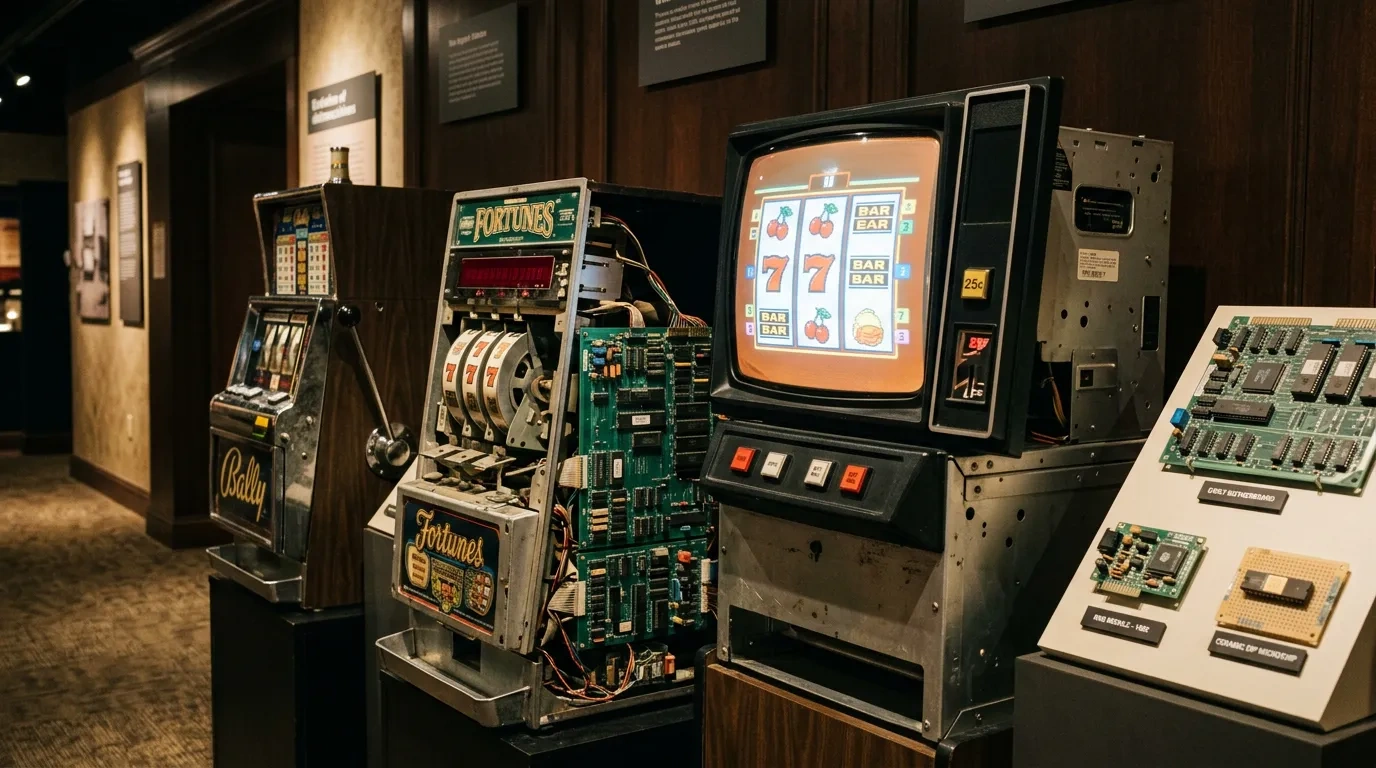
In the 1960s, engineers began adding motors and sensors to American slot machines. Hidden technology replaced visible mechanical parts. Gradually, they removed the old mechanical controls and installed microchips. Random number generators came next, selecting the outcome for each spin. The reels only display their final positions after the machine has made its decision. After 1976, video screens took the place of physical drums. Today, slot machines use programmed software to determine results, rather than relying on reel movement. Symbols light up according to digital values chosen ahead of time.
Early American Gambling
By the early 1900s, gambling devices in America evolved into reel-based games. Early mechanical designs introduced concepts still found in modern machines. Connections exist between these early mechanical designs and the random number generator slot machines used today. Over time, engineers shifted focus from individual machines to broader systems.
| Component | Early Function | Connection to RNG Era |
| Coin input | Activated single spins | Enabled credit-based electronic play |
| Handle pull | Started mechanical rotation | Became electronic button input |
| Reel drums | Displayed spinning physical symbols | Transformed into digital animations |
| Symbol sets | Created visible combination outcomes | Mapped to numerical ranges |
| Direct mechanical odds | Determined payouts through stops | Replaced by programmed weighting |
| Payouts in coins | Required attendant or hopper | Automated through electronic accounting |
| Physical randomness | Relied on spring timing | Converted to software-generated sequences |
Mechanical Construction Inside Classic Reels
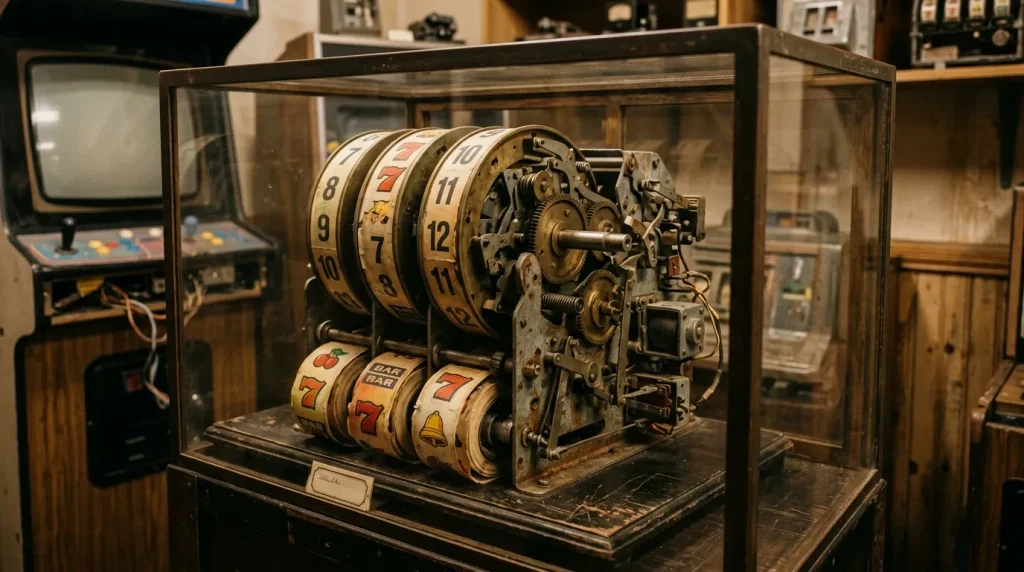
Classic three-reel machines illustrate how slot machines operated before digital technology. Physical components determined the outcome displayed on the reels. The handle linked to the drum through a series of parts. When the player pulled the handle, those mechanisms converted the motion into spinning reels. Inside the machine, additional pieces directed the reels along their mechanical paths.
- Metal reel strips with symbols;
- Rotating shafts and axle connections;
- Physical stops on each drum;
- Index notches for alignment precision;
- Payout trays collecting winning coins;
- Spring-loaded tension mechanisms controlling movement;
- Linkage arms transferring handle force;
- Fixed symbol arrangements on strips.
Core Parts Driving Early Mechanisms
Slot machine designers used springs and levers to store energy with each handle pull, which set the reels’ speed and stopping points. Cams guided reel movement, ratchets prevented backward turning, and escapements controlled the timing of each release.
| Component | Primary Role | Operational Effect |
| Main spring | Stored handle energy | Powered reel rotation |
| Cam stack | Controlled timing sequences | Regulated stopping order |
| Ratchet | Prevented reverse motion | Secured final positions |
| Escapement | Released stored force | Metered energy distribution |
| Trip lever | Initiated stopping cycle | Triggered outcome display |
From Mechanical To Electromechanical Designs
In the 1960s, slot reels began operating with electricity. Designers retained spinning reels but eliminated many moving parts, introducing coils, sensors, and electric motors. These updates led to electromechanical slot machines, allowing operators to pay out more coins automatically. Bally produced Money Honey, which showcased larger payouts due to electrical components, and these components also helped reduce mechanical wear. Manufacturers made a few additional changes.
- Electric motors spun reels;
- Coin detectors verified insertions;
- Lighted panels attracted players;
- Relay banks controlled functions;
- Larger hoppers held coins.
Bally Money Honey Milestone Explained
Money Honey was introduced by Bally in 1963 and changed American casino floors. The slot machine had a completely electromechanical design and featured automated coin distribution through its hopper. Automated coin distribution eliminated attendant calls for standard wins and expanded player access to immediate rewards. The machine paid up to 500 coins automatically.
| Feature | Player Implication |
| 500-coin hopper capacity | Automatic payouts without attendant wait |
| Electronic payout system | Faster coin distribution after wins |
| Multi-coin betting capability | Expanded bet options per spin |
| Integrated light effects | Visual feedback during operation |
| Electronic security sensors | Protected against manipulation attempts |
Rise Of Microchip Controlled Slots
Microchips began operating slot machines in the 1970s. Microprocessors took the place of gears, relays, and cams in various components. The chip monitors the player’s actions and controls the random number generator. It checks the paytable, moves the reels or manages the video display, updates credits, and records activity on the machine. After this shift, designers gained new possibilities. Slots could now include features that mechanical parts had not allowed before.
- Player input processing – reads button presses and bet selections;
- RNG handling – receives the number used to determine each result;
- Paytable checks – matches outcomes with programmed prize values;
- Display control – sends symbols and information to reels or screens;
- Credit updates – adjusts balances after bets and wins;
- Accounting records – tracks bets, payouts, and machine activity;
- Feature management – supports paylines, bonuses, and progressive jackpots.
Basics Of Random Slot Outcomes
Slot machines often have a number generator running in the background. When a player presses spin, the machine picks one value from the ongoing sequence. The software uses this value to decide how the reels will stop.
| Step | Action | Result |
| RNG running | Values generate continuously | Sequence flows nonstop |
| Spin signal | Button press recorded | Current value captured |
| Number captured | Software samples value | Selection complete immediately |
| Reels assigned | Number maps positions | Symbols determined digitally |
| Payout checked | Combination matched paytable | Win calculated instantly |
Simulated Randomness In Modern Reels
Slot machines rely on pseudorandom generators. These algorithms keep changing the sequence of numbers, regardless of whether someone is playing. The generator continues running between spins. When a player presses the button, the machine selects a value from the ongoing sequence.
- Deterministic algorithm produces the number sequence;
- Long cycle length prevents pattern recognition;
- Constant updating continues without player interaction;
- Time-based sampling captures the momentary value;
- Independent spins maintain outcome separation.
Mapping Numbers To Reel Symbols
A designer assigns a specific number to each symbol on a slot machine to control how often each symbol appears. A random-number generator selects values for the symbols, and software matches those values to positions on the reels. This process lets designers control the frequency of certain icons landing on paylines, while the appearance of the machine remains unchanged for players.
| Mapping Concept | Explanation |
| Software-assigned stops | Software assigns more numerical positions than physical reel symbols |
| Symbol weighting | Designers allocate different numerical ranges to each icon |
| High-pay symbol rarity | Jackpot symbols receive smaller numerical ranges |
| Blank spaces | Empty positions can occupy numerical ranges between symbols |
| Bonus icon frequency | Special feature symbols receive specific numerical assignments |
Mechanical Versus Video Slot Machines
Mechanical and video slot machines show their results in different ways. Both types rely on random-number generators to determine outcomes. The RNG selects winning combinations before the reels stop spinning. In mechanical machines, physical drums spin after the software determines their landing positions, while in video machines, animations replace the movement of actual reels.
- Physical drums versus screens;
- Reel animations differ visually;
- Sound layers vary substantially;
- Feature density expands digitally;
- Cabinet size differs greatly.
Birth Of Video Slots In The USA
Video cabinets started showing up in the mid-1970s as the technology for television screens and integrated circuits progressed within the landscape of slot machines using random number generators. Fortune Coin rolled out its first video slot game back in 1976, opting for a tweaked 19-inch Sony Trinitron screen rather than physical reels. Microprocessors managed where symbols landed, enabling digital results to take the place of unpredictability. Nevada regulators have asked for changes at the Las Vegas Hilton before rolling out the new setup on the casino floor across the Strip. IGT bought Fortune Coin and its video tech back in 1978. This shift from mechanical reels to electronic displays broke the constraints of physical symbols, allowing for programmable paylines, bonus animations, and player options that completely changed American casino income in just ten years.
| Year | Location | Screen Type | Adoption Milestone |
| 1976 | Las Vegas | 19-inch Sony Trinitron | Fortune Coin video debut |
| 1976 | Las Vegas Hilton | Modified television display | Nevada regulator trial period |
| 1977 | Las Vegas Strip | Approved video screens | Wider casino installation begins |
| 1978 | Nevada casinos | Standard video cabinets | IGT acquires Fortune Coin |
Memory Chips And Game Programs
Game data is stored in EPROM and other memory chips. These chips hold the code that controls paytables, symbol layouts, and bonus rules. With programmable chips, casino staff can adjust denominations, features, or payout configurations without replacing the entire assembly.
| Stored Item | What It Controls |
| Paytable | Winning combinations and their corresponding payout amounts |
| Reel Map | Symbol positions and how numbers correspond with displayed icons |
| Bonus Triggers | Conditions that activate free spins and special feature rounds |
| Denomination Options | Available bet values and credit sizes |
| Progressive Links | Jackpot accumulation and contribution rates across connected slot machines |
Visual Reels Versus Digital Results
Slot machines use separate systems to determine and display outcomes. A random number generator selects the result before any visible action occurs. The reels spin and stop at specific positions to reveal the result, but the movement of the reels does not affect the outcome. Microprocessors control the display elements each time the reels spin.
- Preselected stop positions determined at the point of outcome selection, not at animation start;
- Synchronized animations across multiple reels;
- Near-miss displays showing losing symbols adjacent to winning ones;
- Staggered reel stopping for suspense;
- Reveal effects delaying final symbol confirmation.
Expansion Of Paylines And Features
Microprocessors and electronic displays appeared in the 1980s. Slot machines became more adaptable through digital chips, which allowed them to support dozens or even hundreds of configurations. Expanded payline structures became standard in casinos during the 1980s.
| Feature Type | What It Adds |
| Multi-line | Extra payline combinations across reels |
| Scatters | Payouts independent of line position |
| Wilds | Substitute symbols forming new wins |
| Multipliers | Increased payout values per spin |
| Progressives | Accumulating jackpot pools across slot machines |
| Bonus Picks | Interactive second-screen selection rounds |
Automatic Payouts And Coin Hoppers
Automatic coin payouts changed how casinos operate by using electromechanical hoppers and sensors. Machines such as Money Honey could spit out hundreds of coins without anyone needing to help, speeding up the game and allowing casino floors to showcase lines of electro-mechanical slot machines. This development got rid of delays in manual payouts and boosted gambling options in casinos all over America. These electrical components lessened the need for staff and helped manage more player transactions on gaming floors. Key parts of the payout included:
- Coin hopper – stored and dispensed coins automatically;
- Overflow chute – directed excess coins to storage;
- Tilt sensor – detected tampering or malfunction;
- Coin counter – tracked dispensed amounts electronically;
- Jackpot lockup – halted payouts above automatic limits.
Player Facing Changes Across Eras
From the 1890s to 2026, the slot machine interface evolved for players. Early machines featured pull handles on their cabinets, but operators later swapped these for buttons. Mechanical drums gave way to screen displays, changing how players interacted. Eventually, video towers took the place of buttons.
| Era | Controls | Reel Look | Sound Level | Speed |
| Mechanical | Pull handle | Metal drums with printed symbols | Quiet clicks and bell | Slow spin |
| Electromechanical | Handle plus buttons | Physical reels with electrical stops | Moderate bells and chimes | Medium spin |
| Early Video | Button panel | Screen-displayed animated symbols | Digital beeps and music | Fast outcome |
| Modern Multi-Screen | Touch screen interface | HD graphics across multiple displays | Surround audio effects | Instant result |
Casino Floor Adoption And Earnings
Casino managers watched digital machines replace the older mechanical models at a quicker pace. While speed played a role, other differences shaped the shift. The main reason was financial gain. Digital machines enabled owners to earn more revenue from each square foot. Operators introduced video slots and machines equipped with microprocessor controls. These changes made it possible to connect progressive jackpots throughout the casino floor.
- Per-machine revenue exceeded mechanical-slot earnings by 15–30 percent in comparable floor positions;
- Lower maintenance costs reduced downtime and repair expenses;
- Faster play cycles processed more spins per hour;
- Linked progressive jackpots attracted more players across multiple machines;
- Flexible denominations allowed instant adjustment without physical modification;
- Electronic accounting simplified revenue tracking and regulatory reporting.
Comparing Old And New Slot Play
From a player’s viewpoint, the difference between mechanical and video slot machines lies in their volatility profiles, how features are integrated, and the way they look, rather than in whether the reels are made of metal or digital pixels. Math models steer both formats, but digital design lets software stretch betting structures and add more layers to bonuses. The table below highlights certain operational features in both formats.
| Aspect | Mechanical Slots | Video Slots |
| Spin pace | Slower due to physical reel rotation | Faster with instant digital processing |
| Pay frequency | Fixed by mechanical stops and symbols | Programmable through software configuration |
| Jackpot size | Limited by hopper capacity | Expandable through progressive networks |
| Feature complexity | Minimal with single payline | Multi-level bonuses and interactive rounds |
| Bet options | Single coin denominations | Multi-denomination and adjustable paylines |
Understanding Classic Reel Odds
The chances on classic reels relied heavily on the specifics of their physical design, which influenced how old slot machines operated mathematically. Early three-reel machines had fairly straightforward probability math that relied on how many stops and symbols were on each reel. This setup let players get a basic idea of their odds once they figured out the layout. These mechanical limits made the chances clear. Some main points that help us understand how old slot machines function are:
- Reel stops count – Each reel contained 20 to 22 physical positions that determined total combinations;
- Symbol repetition – Common symbols appeared multiple times across available stops;
- Jackpot symbol rarity – Top-prize icons occupied only one or two positions per reel;
- Top prize probability – Three jackpot symbols produced odds around 1 in 8,000 to 10,000 spins;
- Impact of blanks – Empty spaces reduced winning-combination frequency substantially.
Modern Slot Software Logic For Players
Slot machine software connects the game’s programming to player actions. When a player spins the reels, the machine records the bet, requests a value from the random number generator, and uses mapping tables to determine reel positions. It checks these against payout rules to decide on winnings. Staff document each transaction for accounting purposes.
| Software Step | Plain-Language Description |
| Modern game programs read stake | System captures bet amount entered |
| RNG provides random numerical value | Generator selects single outcome number |
| Software maps number to symbols | Value converts into reel positions |
| Program evaluates payout eligibility | System checks combination against paytable |
| Machine logs spin transaction data | Records bet and result information |
How Old Slot Machines Work Today
Cabinets like these are still found in collections, museums, and displays throughout the United States. Their design lets people look inside and understand how slot machines function. Viewers watch the reels spin, see the springs and levers in action, and notice the gears and payout components. The reels come to a stop in specific positions. The machine also creates distinct sounds and movements.
- Handle mechanism – transfers the player’s pull into the internal mechanism;
- Spring tension – helps activate and reset the reel assembly;
- Mechanical reels – spin physically after the game cycle begins;
- Reel stops – determine the final visible symbol positions;
- Internal cams – coordinate different stages of the mechanism;
- Payout system – releases coins after qualifying combinations;
- Mechanical sounds – clicks, reel movement, and coin drops come from physical components.
Practical View Of RNG In Online Slots
For online gamers, getting a grip on how RNG functions in virtual slots is based on the same ideas found in physical machines. The microprocessor keeps cranking out pseudorandom values all the time. A press of a button or a tap on the screen grabs a single moment in that ongoing sequence. Timing tactics can’t change the results we choose. The generator runs through thousands of values every second, no matter what the player does. The chosen number dictates which symbols show up on the screen.
| Dimension | Physical Cabinet RNG | Online RNG |
| Hardware | Microprocessor in floor machine | Server-based processor |
| Software | EPROM with stored paytables | Cloud-hosted game files |
| Audit Methods | State gaming commission testing | Independent lab certification |
| Display Style | Physical reels or video monitor | Browser or app graphics |
| Player Input | Button or touchscreen press | Click or tap action |
Mechanical History Shaping Today’s Games
For over seventy years, cabinet designers have used ideas that started with the first slot machines. The Liberty Bell introduced the reel system. Later, developers added steps with the Bally Money Honey and then created the first video cabinets. These choices still decide how symbols line up, how jackpots trigger, and which sounds players hear.
- Three-reel layout – Charles Fey’s original configuration remains standard;
- Fruit symbols – Bell-Fruit Gum imagery persists in classic themes;
- Max-coin jackpots – Top payouts scale with bet size;
- Sound bells – Audio cues signal wins and bonus triggers;
- Credit meters – Digital counters replace coin hoppers and retain familiar displays.
Key Takeaways For Players
Older slot machines relied on physical reels, springs, stops, and mechanical payout parts. Today, software determines each outcome electronically. Random number generator software, processors, digital screens, and accounting systems all operate together within modern slot machines. This shift from hardware to software brought changes. Slot machines now include more paylines, bonus rounds, symbol sets, and varied payouts. Understanding how slot machines evolved over time shows why they have become more complex than earlier machines.
FAQ
Are Old Mechanical Slots Still Fair
Players observe gears, springs, and reels in action as slot machines use mechanical parts to create random outcomes. Older machines have visible components that reveal their workings, while modern machines use hidden software. The fairness of slot machines depends on proper maintenance and regulation. Well-maintained mechanical machines can deliver fair results.
Do Video Reels Change My Chances
Digital graphics display results chosen by the random-number generator, and the images on the reels do not affect outcome odds. Both mechanical and video slot machines use the same mathematical process to determine which combinations result in a win.
Can I Time The Spin Button
Both cabinet slot machines and online slots rely on random number generators. These generators cycle through thousands of possible outcomes every second. In online slots, the RNG chooses a result more quickly than a player can respond. The timing of pressing a button does not influence the outcome.
Does Reel Animation Show Real Spins
Slot machines display spinning graphics to reveal results that their software has already selected. While the reels move and create the appearance of action, a number generator determines the outcome before any animation begins. The motion on the screen simply shows what the machine has already decided.
Why Do Some Slots Pay Less Often
Game designs influence payout frequency. Payout frequency depends on symbol weighting and volatility. One slot machine pays smaller wins often due to balanced symbol distribution. Another slot machine offers larger, rarer prizes due to concentrated weighting. Concentrated weighting results in longer dry periods between payouts.